How Many Wineries Can You Visit in a Day?
Guided days out of Melbourne run four stops to about eight. Here is the real arithmetic on cellar-door timing, why more is not better, and what self-drivers should plan.
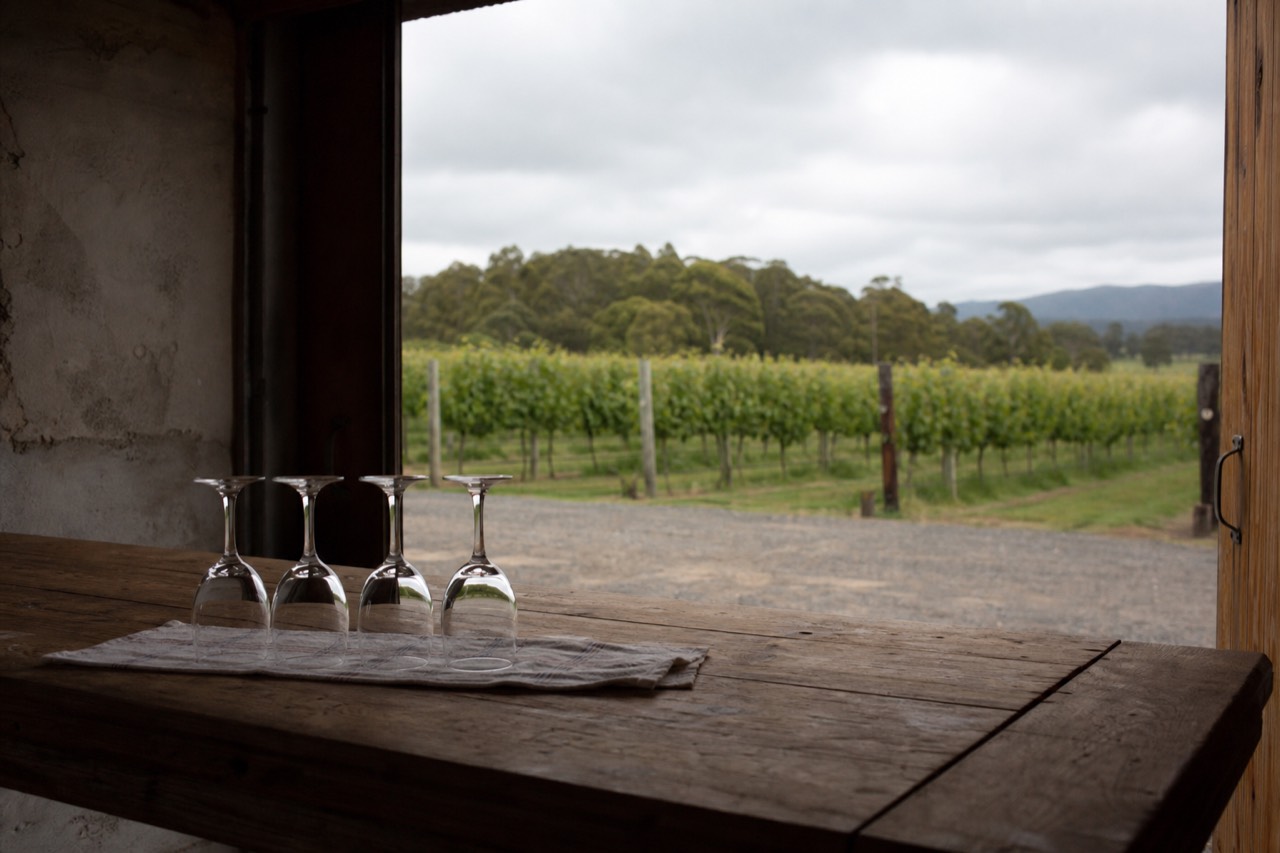
Four is the number the structured tour days out of Melbourne keep landing on. Four wineries, one lunch, home by evening. The one big exception in the Yarra Valley market runs roughly eight stops in the same eight hours, drops the sit-down lunch and calls itself a social day, which is an honest label for what doubling the stop count actually does.
Neither is wrong. But the difference between four and eight is a difference in what the day feels like, and almost nobody explains that before you book.
How many wineries can you visit in a day?
Four on a standard guided day from Melbourne, with a lunch stop. Up to about eight if you take the social format, which includes every tasting but leaves lunch to you and moves faster. Self-drivers should plan three or four. Beyond eight, the day stops being a wine day and becomes a bus tour with wine on it.
The ceiling is set by geography before anything else. The Yarra Valley sits about an hour from the CBD in each direction, so two hours of an eight-hour day are gone before you taste anything. What is left is six hours to split between cellar doors and the short hops between them, and the hops inside the valley are genuinely short, five to fifteen minutes in most cases.
There are over 90 cellar doors in the Yarra Valley, which sounds like an invitation to cram. It is not. Doing eight in a day means you have seen under a tenth of them and remember maybe three, and the region is not going anywhere.
Here is what the actual bookable days from Melbourne do.
| Format | Hours | Stops | Tastings included | Group cap |
|---|---|---|---|---|
| Self-paced loop bus | 7 to 8 | As many as you fit, your call | No, paid at each door | 24 per bus |
| Social wine, gin, cider and chocolate day | 8 | Around 8, the mix flexes daily | Yes, all of them | 23 |
| Wine, gin, whisky and chocolate day | 8 | 5 | Yes, lunch bought separately | Small group |
| Cheap guided full day | 8 | 5 to 6 with an optional gin stop | Yes | Needs 4 booked to run |
| All-inclusive coach | 8 | 4 wineries | Yes, plus winery lunch with wine | 24 |
| Wine, lunch and gin day | 8 to 8.5 | 4 | Yes, plus a two-course winery lunch | 20 |
| Adults-only small group | 8 | 4 | Yes, plus two-course lunch with wine | 11 |
| Premium wine-first day | 10 | 4 | Yes, plus a la carte lunch with wine | 12 |
| Wildlife and wine day | 10 | 2 wineries plus a sanctuary | Yes, plus vineyard lunch | 12 |
| Afternoon half day | Half day | 4 plus a kangaroo stop | Yes, lunch bought on site | 11 |
Read down the stop column and the pattern is obvious. Four is the default for anything with a proper lunch in it. Five to eight only happens when lunch is either dropped, bought quickly, or replaced with cheese and chocolate along the way.
Why do most guided days stop at four?
Because lunch eats two hours. A sit-down winery lunch with wine takes 90 minutes to two hours by the time you are seated, served and back on the bus, and that is one third of the usable day. Four cellar doors plus lunch plus two hours of freeway is a full eight hours with nothing padded.
Operators are not being lazy. Run the clock: leave the CBD at 8:30am, reach the first cellar door around 9:45am, and you have until roughly 4pm before the return drive has to start if you want a 5pm drop-off. That is six and a quarter hours. Subtract a two-hour lunch and four short transfers, and you have about three and a half hours left. Split across four cellar doors, that is under an hour each, which is exactly right and not a minute more.
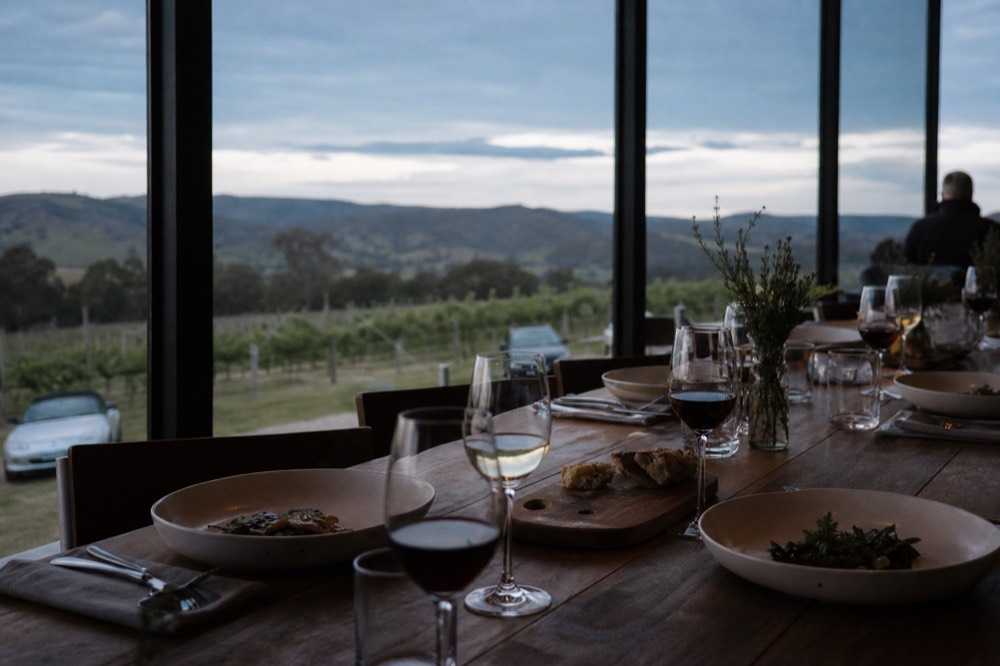
The all-inclusive coach day is the clearest expression of this structure: four wineries at Greenstone, Balgownie, Yering Farm and Soumah, every tasting plus the winery lunch with wine in the fare, 24 seats, a minimum age of five, and a 4.7 rating across 1,418 reviews. It is the most-booked shape in the region for a reason, and you can see the current price and pickup points if the four-plus-lunch structure is what you want.
The other reason four holds is that the fourth stop is where most groups start to flag. A tour that pushes past it with a full lunch inside everyone is not selling more wine, it is selling more time on a bus.
What does an eight-stop day actually feel like?
Fast, sociable and light on sitting down. The eight-stop day covers wineries plus a gin distillery, a cider maker and a chocolaterie, with the mix flexing daily, every tasting included and lunch at your own expense of roughly A$25 to A$35. It works because half those stops are short by nature.
The trick that makes eight possible is that they are not eight cellar doors. A gin tasting, a cider tasting and a chocolaterie visit are quicker and lighter than a seated flight of six wines, and they break up the palate rather than stacking on it. Names on the rotation include Yering Farm, Tokar, St Huberts, Chandon, Four Pillars gin, Payten & Jones, Watts River and the Chocolaterie, and the exact list changes day to day.
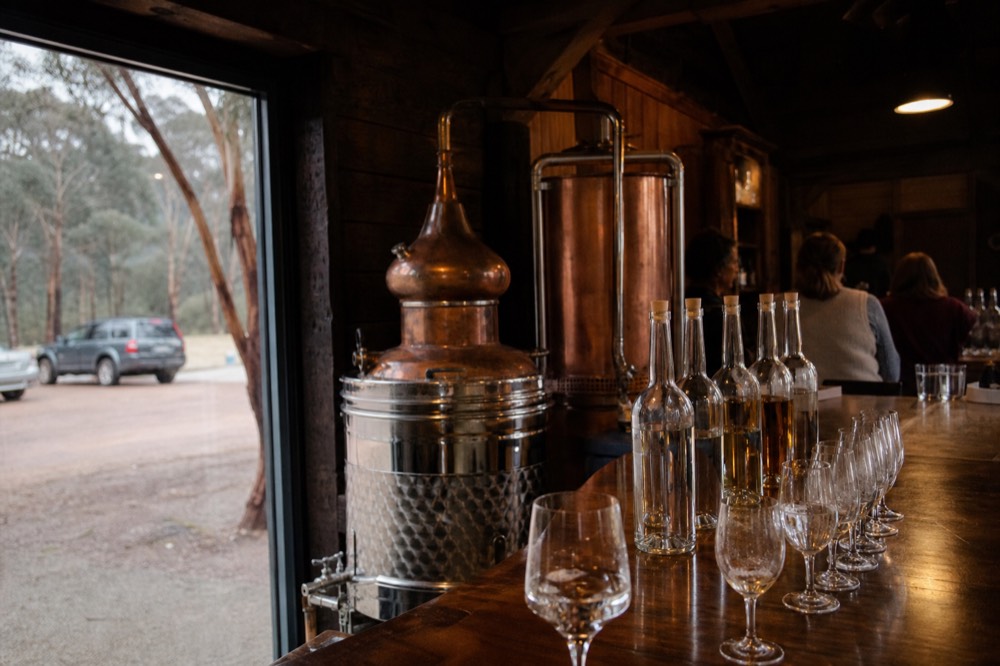
It is also the market leader by a distance, at 5.0 across 5,319 reviews and from US$93 with all tastings in the fare, which makes it the cheapest included-tasting day of the lot. Two honest caveats before you assume it is the obvious pick: lunch is not included, and children ride at full adult price. If the pace and the price suit, check what dates it has open.
What eight stops costs you is depth. You will not have a long conversation with anyone about soil, and you will not sit down for two hours anywhere. People who want that should book a four-stop day and stop reading here.
How long does one cellar door really take?
Forty-five to sixty minutes, honestly counted. That covers walking in, waiting for a bench on a busy Saturday, a seated flight of four to six wines with someone explaining them, and the shop on the way out. Compress it to thirty minutes and you are drinking rather than tasting.
The minutes go faster than people expect. Five to ten of them disappear before a glass is poured, especially at the bigger estates in peak season. The flight itself runs twenty to thirty minutes if the staff member is any good and not being rushed. Then there is the purchase decision, which matters practically as well as commercially: at Yering Station the tasting fee runs A$15, A$20 or A$35 depending on the tier and is negated if you buy a bottle, and waiver-on-purchase policies are common across the region.
Fatigue is the other limit, and it is not only about alcohol. Past five or six tastings the differences between wines flatten out, and the eighth pour of the day tells you almost nothing the fifth did not. Spitting helps more than people are willing to do in public. So does drinking water at every stop and eating something that is not cheese.
Responsible-service rules apply throughout, and they are not decorative. Staff at Victorian licensed venues must refuse service to anyone intoxicated, and photo ID gets checked for anyone who looks under 25 against a legal drinking age of 18. A tour guide will not argue with a cellar door that cuts someone off. Our notes on tasting-room mistakes cover the rest of the etiquette that keeps a long day pleasant.
How many should you plan if you are driving yourself?
Three or four, with lunch, and one person drinks nothing. Victoria's limit is 0.05 for a full licence and zero for learner and probationary drivers. Three cellar doors is enough wine to put a driver over, so the designated driver is a real role, not a formality.
Self-drivers consistently over-plan. Six stops on paper becomes four in practice once you factor in finding the place, parking, and the fact that the person behind the wheel is watching everyone else enjoy themselves. Three or four is the honest number, and it gives you time to sit somewhere for lunch instead of eating in the car.
The law is worth stating plainly because the penalties are heavy. Victoria's transport department sets the full-licence limit at 0.05 and zero for L and P platers, and a first offence typically brings licence cancellation for at least three months, an alcohol interlock for six months or more, a zero-BAC period of three years or longer afterwards, a behaviour change program and a fine. Melbourne tolls on the way out add roughly A$8 to A$18 a day depending on route, and full-price tasting fees at every door land on top, so the money saved is smaller than it looks.
| Clock | A four-stop guided day | An eight-stop social day |
|---|---|---|
| 8:30am | CBD pickup | CBD pickup |
| 9:45am | Cellar door one, seated flight | Stop one, quick tasting |
| 10:45am | Cellar door two | Stops two and three, short and light |
| 12:00pm | Cellar door three | Stop four, then lunch bought on the run |
| 1:00pm | Winery lunch, two courses with wine | Stops five and six |
| 3:00pm | Cellar door four | Stop seven, gin or cider |
| 4:00pm | Return drive begins | Stop eight, chocolate |
| 5:00pm | Back in the city | Return drive begins |
That worked example is arithmetic rather than any single operator's timetable, built from an hour of driving each way and realistic stop lengths. Compare the two columns and the trade is clear: one column has a two-hour lunch in it, the other has four extra stops.
Which format lets you set your own pace?
The self-paced loop bus. It circles the cellar doors for seven to eight hours with city and Lilydale pickup, caps at 24 per bus and costs from US$66, with tastings paid at each door at roughly A$10 to A$15 and frequently waived if you buy a bottle. You decide how many stops you make and how long each one gets.
This is the answer for anyone who has read everything above and concluded that the real problem is being on somebody else's clock. On a loop, the itinerary is yours. Spend ninety minutes at one estate because the conversation is good, skip the next two, get off at the chocolaterie because someone in your group has had enough wine. Nobody counts heads at you.
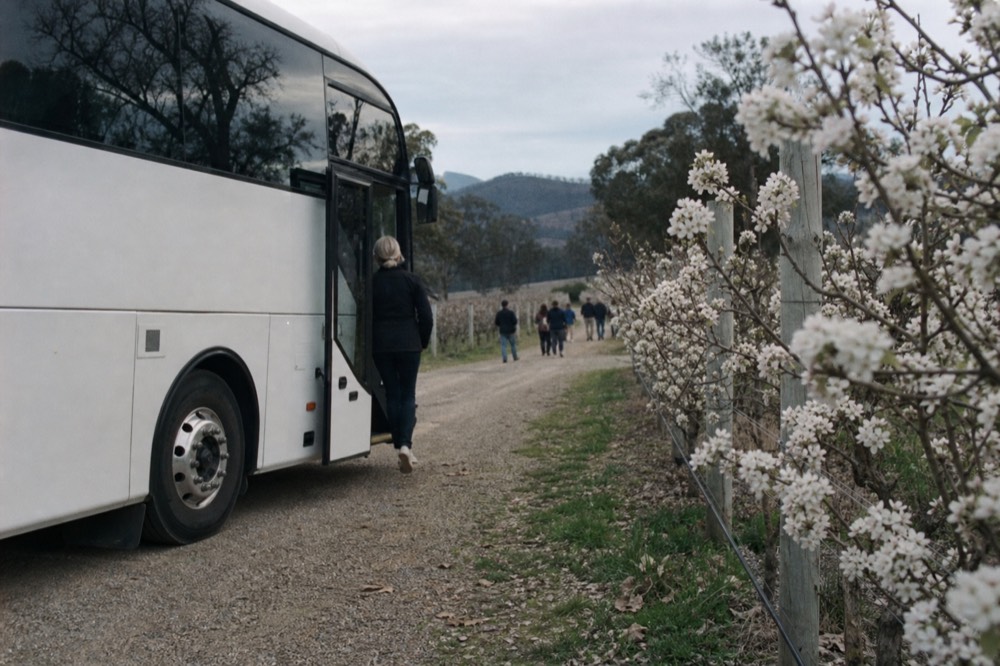
It holds a 5.0 rating across 269 reviews, and its economics reward the people who buy wine: pay A$10 to A$15 at each door, buy one bottle you were going to buy anyway, and a good share of the tasting cost comes back. If that structure fits how you like to travel, check today's departures and price before you settle on a guided day instead.
The trade-off is that nothing is included and nothing is curated. You choose the cellar doors, which means you need a rough plan, and our list of the valley's standout cellar doors is a reasonable starting point. If four hours is all you have rather than eight, the short-format options are a different calculation again, and the full set of departures with stop counts and inclusions is laid out on the Yarra Valley tour lineup. For a first visit with a full free day, our day trip planner walks through the whole sequence from pickup to drop-off.